Showing posts with label Research into Thriller Films. Show all posts

Wednesday, 8 October 2014

Research into Editing Styles - Miss Georgiou

Editing

Editing is the way in which a film is changed after it has been shot to make it make sense and come together successfully. There are many various techniques in editing that can create different effects within a film. Without editing, films wouldn't make sense and wouldn't be interesting for viewing as there would be lack in variation. In thriller films particularly, editing is used in many ways to create suspense, surprise and shock - 3 main elements that ensure a thriller's success.


I have chosen a clip from 'Saw 4' in which to analyse as it has a high number of edits within, which creates many different effects.
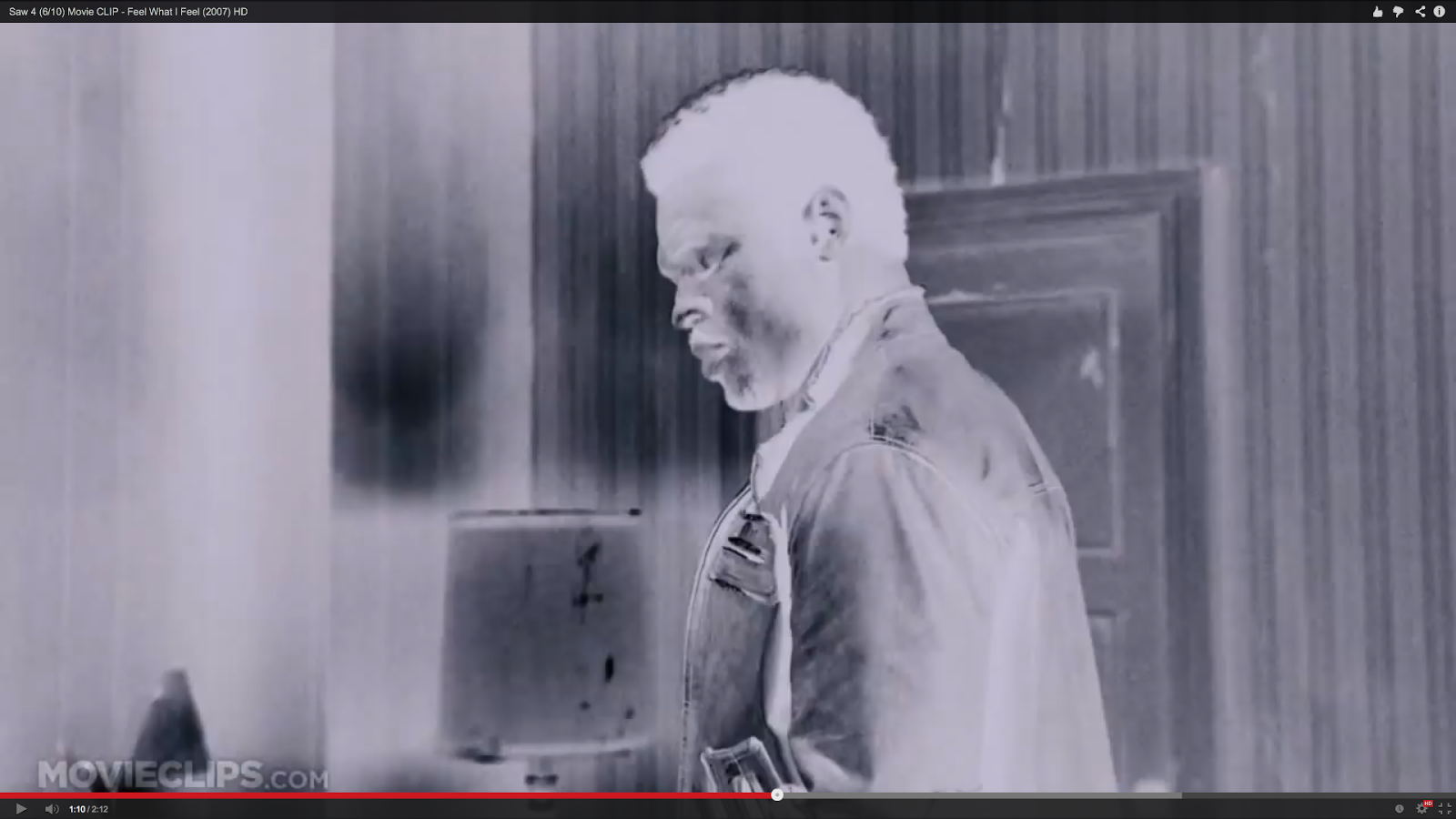
There is a negative/x ray filter edited into the clip which flashes very sharply, abstracting the clips natural colour. This is present just as the male character stands up in the room. This use of filter creates a feeling of fear, the feeling that someone else is there with the character but not visibly - like someone is in control. The audience is aimed to feel like this because, obviously the characters in the film are pretty much being controlled from the tasks they have to complete. Audiences are made to also feel tense and on edge due to the fact that what happens next is unpredictable and unexpected. The way the filter changes the overall colourings of the scene (in a flash) could reflect the negative change in the characters life due to the situation in which he is in. The colours are also not appreciative to look at and so creates a sense of discomfort and empathetic view of the character making the audience feel worried for the character in the next few moments that follow this scene. It is conventional to the thriller genre to have a filter such as this one in some parts as, it makes the film different, unique and grabs the audience's attention, keeping them fixed to the screen. It also creates a tense and jumpy effect on the audience as it is different to the natural look on the scene and is unexpected. Making the audience feel this way is conventional to the thriller genre as one of the main conventions of a thriller is to ensure that the audience are shocked and surprised and this is what a filter creates.

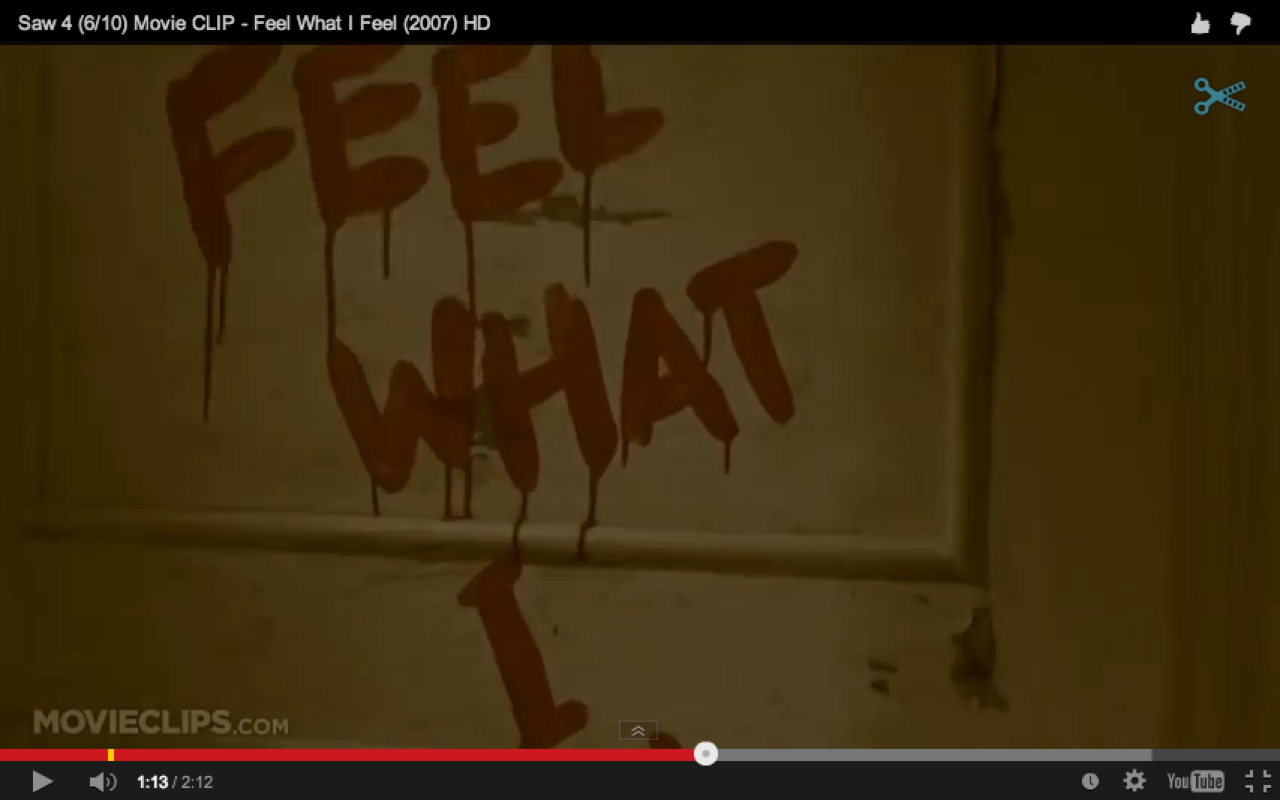
Another use of editing in this clip is a montage. This is shown when the male character sees 'feel what I feel' written on the door and various close up shots are shown together one after the other in quick pace. This builds suspense as the montage is very quick and so could reflect the panic he must be feeling or the lack of time he has so how quick time is running out. It keeps the audience on edge as they feel sympathetic towards the character for  the situation he is in. From how quick the montage is as-well keeps the audience feeling on edge as it also creates tensions and suspense as if it is leading up to something that may shock or surprise them. As well as this, it emphasises the message written on the door making the audience weary of its existence and that it must mean something important from the way it is clearly portrayed and emphasised. A montage is conventional to the thriller genre as it builds up suspense very quickly and is normally used to create a climax that occurs at the end of the montage. This gives more of an impact on the audience making them either jump or be shocked/ surprised. The use of a montage creates more emphasis on a final action whilst also creating deep emphasis and focus on what is in the content of the montage. It allows the audience to focus on these particular shots and the content specifically so they can recognise how symbolic these particular shots/images are within the scene. This creates suspense as to what significance these images have - a typical convention of the thriller genre. 

Timing of shots is also used in the clip where the male character first glances at the door with the message on. The way the shot is sped up slightly, enhances his reaction and makes that central and the focus of the shot. The audience are able to get a real feel for how he is feeling as his expression is clearly portrayed in this shot which means also that the audience can relate to him as they feel like they are part of the scene. It creates an effect of sympathy for the character but also keeps the audience feeling on edge because they know the situation but not what is going to happen. This is conventional to the thriller genre as to create shock or surprise there needs to be some sort of build up. Making shots slower or faster can create this build up really well especially if you have a prolonged shot and then something quick - it creates a really 'jumpy' finish. Making shots slower or faster gives a different look on the scene and can cause tension to be built. Tension being created is vital in a thriller as it helps build suspense and engage the audience. Therefore, timing of shots is conventional to the thriller genre from the effects it is able to create.

From researching the different ways in which you can edit clips and use them to create effects, has helped me in thinking of ideas of types of editing in which I will include in my own thriller opening sequence. I really like the use of montage and filter as it creates a real sense of enigma and so I will most likely use these types of edits in my thriller. Seeing how they are used in different ways gives me a use of inspiration. In my own thriller sequence, I will ensure that the montage and use of filter will be used in complimentary with each other. I believe this would create a greater impact as I could use them both to illustrate a flashback within the scene. Therefore, it will be recognisable that it is a flashback, whilst also creating the suspense and tension I will intend it to create. From including a montage and use of a filter in my final opening thriller sequence, it is clear that this research into editing styles has been beneficial to me. 


Research into Conventions - Miss Miller

Conventions

Conventions are typical elements featured in films that you expect to see. Conventions are different depending what genre the film is categorised as. Thriller conventions are things such as, low-key lighting, an isolated setting and an eery soundtrack. These create the surprise, suspense and shock elements to the thriller, making it more successful for an audiences viewing. 


The clip in which I have chosen to analyse is from 'Halloween'. This particular clip demonstrates many thriller conventions throughout that I thought I could easily talk about.


The first convention in which is clearly visible is low-key lighting. This is portrayed throughout the clip however, darker at some parts to allow for the audience to focus on the main, centred object or being - shown in screenshot for example. This creates a sense of foreboding and enigma from the way you cannot see everything clearly and so something could be lurking in the darkness in which the audience are unaware of. As darkness eventually leads to blackness, it creates a sense of fear as 'black' connotes danger and the unknown. This keeps the audience feeling on edge and gripped to the scene as they want to see what happens and what appears from the darkness. If the scene was high-key lighted, it would create a whole different effect. The killer would be more visible, the scene would seem more positive and the audience wouldn't feel so connected with the victim as the situation wouldn't be seen as bad. The fact it's low-key lighted gives the impression that no one is around to save the victim and that even if they were there is no hope in them getting to her as from the message that darkness gives off. This is a convention of the thriller genre as suspense is created which is a main element in which successful thrillers contain. Low-key lighting creates tense moments and gives the scene a negative and unknowing look. 


A further convention of the thriller genre is handheld camera movements. This creates the effect of enigma as it gives the scene an edgy, tense feel. The audience feel as if they are in the scene and part of it as it is as if they are holding the camera. It also makes the scene seem more realistic and like a general expected viewing of what the scene is really like. The audience are then able to relate to the character more for example with the female victim, as it's as if the audience are traveling with her when trying to escape from contact with the killer. The unsteadiness of the camera movement creates suspense as it reflects the panic created by the killer approaching. This is conventional to the thriller genre as using this movement creates exactly what a thriller should create - suspense. It either shows the view from a character or still an audiences perspective but as if they are there filming it in the scene. This makes them feel more involved and therefore creates a bigger impact on them when something unexpected happens and so this creates the shock or surprise element in which successful thriller create. 


A killer with a hidden identity is also a common convention of a thriller work. The use of the mask to hide the identity of the killer creates a sense of fear. This is because the character could already be existent in the film and so the killer could be in fact a character that is seen to be a positive one. The mask is completely white and covers the whole face with just eye and breathing gaps giving the audience and characters no detail of the face of the killer whatsoever. All that is shown is the hair, however, many people can have very similar if not the same hair and style but a face is much more recognizable. Unknowing who is behind the mask creates suspense as not just the characters in the scene are unaware of who they are but also the audience. It's not as if the audience know and the characters don't, so as the audience also don't know who the killer is they can relate to the characters especially the victim as they feel worried for them, hoping that they will get out alive. Thrillers have this as a convention because normally the killer isn't revealed until the end and so keeping them unidentified is vital in creating the shocking, unexpected ending. With the identity of the killer hidden, it leaves the audience to ponder on who the killer actually is and creates the suspense that is intended.


The sharp object use of iconography in order to kill is also a further convention of the thriller genre. It is shown just as the killer is about to murder the female victim. The most common iconography use is a knife as shown to be used in this clip - portrayed in screenshot. A knife is a everyday object that is used in the home in ways to simply prepare food most commonly. The way this is an everyday object but used in a different way - in order to kill - creates a sense of fear. Everyone owns this object and so it creates fear as the audience are aware of it's capabilities and the way that everyone can get in control of a knife so easily. It is used to kill which is seen as unnatural and so also creates suspense as it means that the killer doesn't think in the same way as a 'normal' person would. The audience feel fearful of the object and the way in which it is used and so are weary of the character in control of it. Audiences then feel obliged to fee worried for characters that come into contact with characters that have such iconography in their control. This is a convention of a thriller film as the majority of thrillers have a killer of some sort that needs a weapon to kill their victims with. Therefore, a sharp object is usually used such as a knife or axe, this creates a more brutal murder too with evidence left such as blood splatters. 


The eery soundtrack is another convention of a thriller film. It is shown from the beginning however, stops when the female victim gets her leg/foot stuck in the lift. Just after the soundtrack silences, the girl screams. The way the soundtrack stops creates the shock of the scream as it emphasises it and makes the audience feel a jump as it is unexpected. The soundtrack is also eery from the distinctive way in which it sounds which creates a sense of enigma and foreboding as its unnatural and suspenseful. This is conventional to the thriller genre as the soundtrack brings the scene together making more of an impact on the audience - especially when it suddenly stops. Likewise in this clip, it can be used to emphasise other sounds or movements and so creates a more successful shock or surprise feeling.

In my thriller opening sequence I will use a few of these conventions such as the low-key lighting and handheld camera movements as I like the effects they create. From exploring these conventions I can see what ones help make a thriller successful and from the research in which I have done, I can also see which ones are more important. 


Inspirations - Miss Georgiou

Inspirations 

We need inspiration before we create something to gather external ideas other than our own to broaden our knowledge and familiarity of the 'something' - in this case, the thriller genre. To also get inspiration from others means that we can gather further insight as to what is expected from thrillers - conventional features. We can take inspiration from other thriller films that intend to create the same effects as to what our own film will want to. I have taken inspiration from successful thriller films such as 'House At The End Of The Street' and 'Shutter Island'. 


Firstly, in my post for cinematography, I looked at a sequence from 'The House At The End Of The Street' which have given me many reasons to be inspired. In the clip I analysed, there were many point of view shots and handheld movements (as unclearly shown screenshotted to the left). The use of these shots were inspiring as they created the shock and suspense that they are intended to create as well as building strong relationships between the characters and the audience. These shots will be incorporated in our opening sequence, however, in a slightly different way. The point of view/handheld movement of someone running through a forest will be very similar to what we will use and the point of view shot will not be made so obvious to the victim as it is in this clip. I found that these shots helped to create shock, suspense and surprise, therefore making them conventional to the thriller genre. The point of view shots in-particular made the audience feel more empathetic towards the characters as the audience are made to feel like they are in the same situation as the characters themselves. Moreover, the audience feel more of an impact when something bad happens to the character as they feel empathetic and in the same situation as the character is in. We will include point of view shots from our victim as well as the antagonist. The victim's point of view shots will make the audience feel empathetic towards this character and more like they are in their position. Whereas, the point of view shots from the antagonist's perspective make the audience feel tense and suspenseful as they are unable to see who this particular character is. This makes the audience feel scared for the victim as they also do not know who is 'stalking' our victim. 


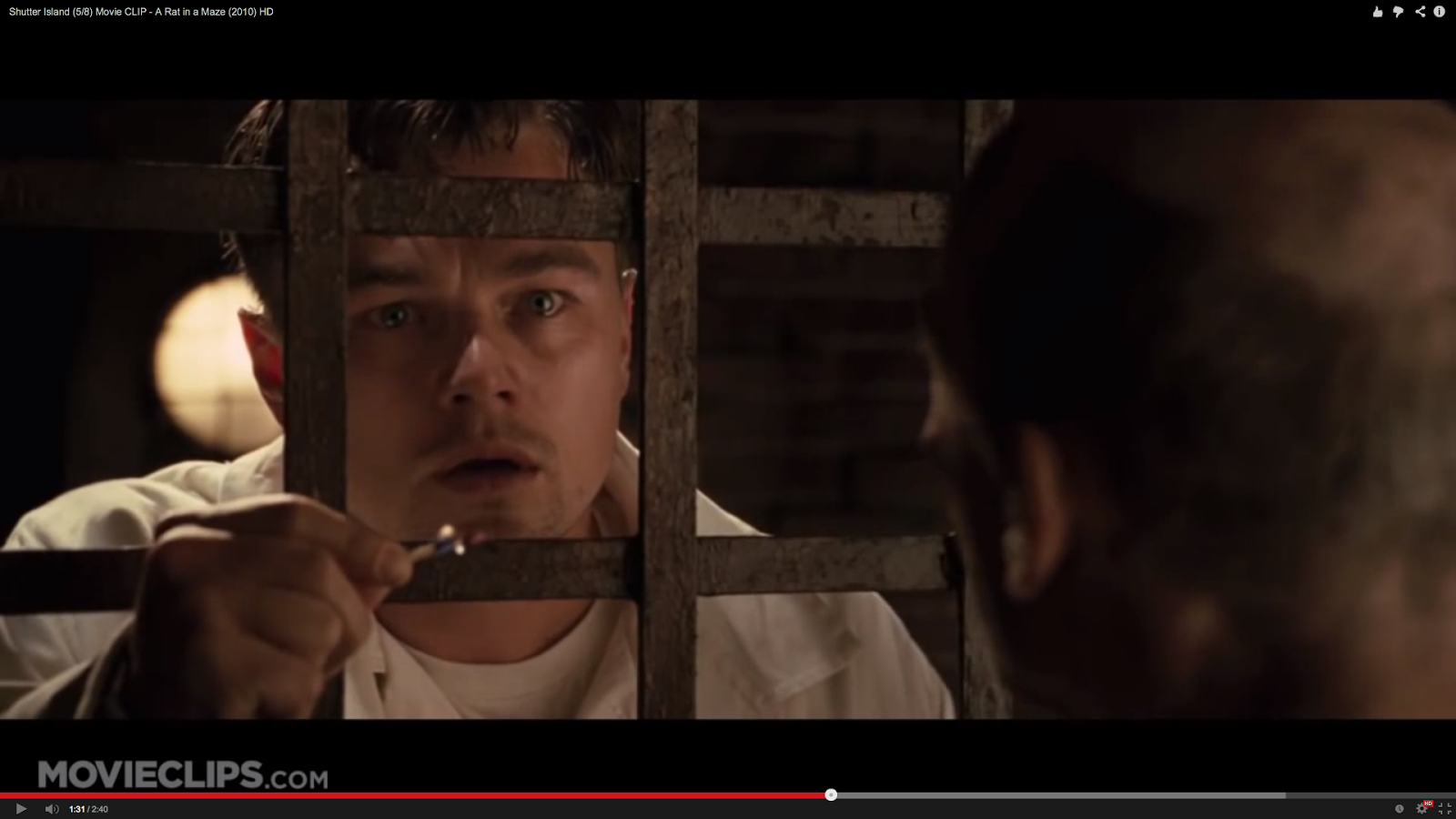
I have also gained inspiration from my mise-en-scene post where I analysed a clip from 'Shutter Island'. The use of all five elements of mise-en-scene were used in specific ways to create a tense and eerie atmosphere throughout the sequence - I particularly liked the use of lighting. It was low-key throughout most of the clip (as shown in the screenshot to the left) bringing this negative mood down on the scene. The lighted match is the key light in this scene and having this being the only brightest source of light makes the sequence a lot more unpredictable as this key light could go at any time. The audience are made to feel on edge as they cannot see everything as clearly as broad daylight would demonstrate - this is what we intend to make the audience feel for our opening sequence. Furthermore, I was inspired from the way particular character's appearances are slightly distorted as the lack of light doesn't allow for every intricate detail of them to be seen. This makes the audience feel more unknowing of the character as their view of them is restricted to an extent. Therefore, the lighting in our sequence will be inspired by the effective use of lighting shown in the 'Shutter Island' clip. We will be using low-key lighting throughout our sequence to create an 'on edge' feel within the audience and a tense, negative atmosphere - staying also conventional to the thriller genre.


Secondly, I was also inspired by the choice of setting (as screenshotted to the left). It was very conventional to the thriller genre as it is an isolated one which creates a relationship between the characters and the audience as the audience fear if and how the characters are going to cope. The way the setting is enclosed creates a sense of entrapment and fear for the characters. This will inspire my own thriller opening sequence as we will have an isolated setting where the characters will experience a feel of entrapment and this will be reflected onto the audience. I feel that the use of a setting such as this one will help contribute to making the relationship between the characters and the audience stronger as the audience will feel more worried and sympathetic towards them. Having an isolated setting is conventional to the thriller genre because in thrillers there is usually at least one character who manages to get into trouble and cannot escape from somewhere and so an isolated setting allows this to occur. We will be inspired by having our sequence set in a forest as this is an isolated setting that we can also easily access and can build a narrative with too. It will also create a sense of normality as there are forests all over the country and so all audiences are familiar with this type of setting.


Furthermore, I have taken inspiration from my sound post where I analysed a short clip from 'The Shining'. There were many uses of different types of sound in this clip - non-diegetic, diegetic and parallel for example. I have mostly been inspired by the non-diegetic soundtrack as it was eerie and screechy making it unpleasant for the audience to listen to - it is played from the start (0.00) to the end of the clip (2.07). This makes them the audience feel quite uncomfortable and gives them the feeling of being on edge as tension is built up. The soundtrack is also parallel sound as it compliments the actions in the scene which I think is really effective as it engages the audience a lot more, creating emphasis on certain particular actions. I will take inspiration from this and make sure that the sound in our sequence will compliment the actions that are taking place in the scene, so this therefore covers two types of sound through the use of one sound. It's also conventional to the thriller genre as it creates suspense and leads to a surprise or shocking action. In my own thriller sequence, from inspiration from this research into sound, a non-diegetic soundtrack will be included in order to build tension and create suspense and an eerie atmosphere throughout my whole sequence.


In editing, I analysed a clip from 'Saw 4' which very much inspired me. There was a high use of editing in this clip creating much variation throughout the sequence. Particularly, the montage I found very effective (as shown in the screenshot to the left). It created emphasis on the message portrayed in the scene and became the main focus for the audience, therefore with this significant image being made memorable to them. Inspiration will be taken from this from the way that we will include a montage in our film to build up tension and create emphasis on certain images in our sequence. This will also ensure conventionality to the thriller genre, as suspense, shock and surprise will be created from the use of it. We will use it in ours when the victim is reflecting on the past events of the sequence where she originally found a picture of her pinned to a tree. It will be used slightly differently in ours as it will reflect a flashback, however, because we will still be including a montage, it will still demonstrate inspiration from the clip of 'Saw 4'.


This research was useful for retrieving and developing ideas for our narrative from the ability to explore the different ideas in which different thriller sequences display. The variation gives more of a broad view of the different ways elements are included. Each inspiration has contributed something new and different to our sequence giving it ideas that are slightly more 'outside the box' and professional. Taking inspirations from other thrillers allows us to create a sequence that is more accurate and valid to it's target audience. Inspiration from other thrillers gives us ideas that will satisfy our target audience and help to make a relationship between the audience and the characters occur. Furthermore, it will help our sequence meet the criteria of what is conventional to the thriller genre and therefore make ours more successful. 


Thursday, 2 October 2014

Research into Sound - Miss Miller

Sound

Sound is a vital part of film-making as it improves the film's scenes and makes the film come to life. It is split in two main parts - diegetic and non-diegetic sound - which are used in different ways to make scenes more interesting and edgy. In thriller works, sound is used on and offscreen to build suspense and tension throughout. Different sound effects and soundtracks contribute to scenes in order to build up tension making the audiences feel on edge. 


I have chosen to analyse a clip from 'The Shining' are I believe the sounds in this clip had a variation in type. 

Non-diegetic Sound

In the clip there is a non-diegetic sound of an eerie, screechy soundtrack featured just as Johnny approaches the door - from 0.00 all the way through the clip. This soundtrack builds up tension and is also parallel sound as it compliments the actions during the clip. The build up of the sound however, does not stop when Johnny finally puts the axe through the door - which is what you would expect, especially for a thriller. Most thrillers normally have a soundtrack of this type included, to create a build up of tension to a final climax where the soundtrack stops just as a shocking or surprising action occurs - not in this clip. This makes this clip quite unique compared to others in reference to sound and makes the audience feel intrigued and engaged as a result. Suspense is still achieved however, as other sounds compliment one another causing a mixture of sounds present at once, for example, the panicky screams and the soundtrack. This use of soundtrack is conventional to the thriller genre as the screechiness of it makes the audience feel on edge and builds up suspense and tension in the best way as it isn't comfortable to listen to. It also causes audiences to build a relationship with the character as they are made to feel more empathetic and sympathetic to the victim and their situation because the soundtrack makes the scene seem more emphasised and tense. Therefore, they feel worried for the victim and hope that they will escape as soon as possible. 

Diegetic Sound

The sound of the axe is a good example of diegetic sound in this clip, as well as the knife. The axe (1.17) and the knife (2.09) are both quite harmful sounds from the fact that they are classed as being violent iconography and even if they are off screen at points, the audience can easily recognise what they are. Because of their distinctive sound, it automatically creates a sense of foreboding for the audience know what the objects relating to these specific sounds can do. This makes us feel weary of the characters that are in control of each of these objects/weapons and feel worried for victims of these characters. The axe and the knife are both sharp objects with properties that mean it can cause death and so this is why these sounds are found in thrillers an awful lot. Due to pretty much every thriller having a killer and at least one victim, there is always an including of t least one type of weapon - a knife being probably the most common. From seeing and hearing the use of this weapon for killing, audiences may associate that sound with killing from then on. This turns an everyday object into a dangerous one and so when the audience hear it they feel weary and on edge and are waiting for something bad to happen. So although this particular use of diegetic sound creates a sense of normality and gives the audience thought into being in that specific scenario, it still creates that suspense and shock elements in-particular from the way in which these objects are used. Furthermore, it represents the antagonist as being fearless and close to the victim as knives and axes are up close and personal whereas iconography such as a gun can be used to kill from further away, showing the antagonist as being slightly weaker and less deluded. The audience build a relationship with the characters, especially the victim, as they can see the antagonist and can guess his intentions. The audience automatically feel worried for the victim here and begin to think of what they would do if they were in her situation.Thrillers try to create elements of surprise, suspense and shock and so this is what diegetic sounds created by these weapons create - therefore, they are conventional to the thriller genre. Without these diegetic sound, there is no sense of normality and therefore no believe in the film as it doesn't seem realistic. This means that the audience will not feel as affected by the film as no impact is made. 

On Screen Sound

One example of on-screen sound in this clip is screaming from the victimised girl (1.18 onwards). The screaming was clearly coming from her as the audience were able to witness it on-screen. This creates a feeling of sympathy from the audience towards the victim as we get a real feeling how distressed she is. In addition, as the audience are able to see what the antagonist doing, the audience are made to feel on edge because we know that something bad is most likely to happen and a sense of foreboding is created. A relationship is built between the victim and the audience as the audience can not only hear but get a real sense visually of how scared and panicked the victim is and so the audience feel scared for her. Screaming is a typical on-screen (and off-screen) sound in a thriller and so is conventional to its genre. There is always a victim and when they are in some sort of danger their initial, involuntary reaction is to scream and so this is why it is used a lot throughout this genre in-particular. Having the scream as on-screen sound creates enigma as audiences are able to see where the scream is coming from but not necessarily how they will escape from their pain and panic. This makes the scream more personal ad direct, as it is putting a sound to its source. Suspense is then created and causes a response from the audience to the actions present in the scene. 

Parallel Sound

The girl victim in this clip is shown to be scared and fearful of her death. We know this from the crying, screaming and the quick and heavy breathing in which she makes - this is parallel sound (1.18 onwards). The sound compliments this frightened feeling and so is what the audience expect to hear. Audiences feel empathetic towards her because of her situation and the quick pants of breath build up tension and panic that is reflected onto the audience. From the continuous hearing of these distressing sounds, the audience also feel worried for the victim and hope that she is relieved from the danger that she faces as quick as possible therefore, building a relationship between them. This type of parallel sound is conventional to the thriller genre as there are many distressed characters that feature within them. These sounds help build up tension and shock as the quick tempo of them getting faster and faster creates more of a climax to fall into. Therefore, having this match of sound makes the thriller make sense and easily understandable. If someone was about to get killed and the victim is laughing, it simply wouldn't work as the audience wouldn't feel obliged to react in the targeted way. 

This research into sound has helped me think of the different ways in which I can use sound in my sequence and in the different ways it can be used to make my sequence conventional to the thriller genre. Through the use of sound in different ways, suspense, surprise and shock can be created which are 3 main elements in order to make a thriller successful. From analysing the different types of sound, I can see how they each in turn have a vital role in a thriller film. I really like the idea of using violent iconography through diegetic sound and have found that these sounds are very conventional to the thriller genre. The impact from these sounds create a great effect of the audience and really emphasise the presence of these objects. Moreover, I was inspired by the use if the non-diegetic soundtrack that runs in the background throughout the clip. I think the input of this created a tense atmospheric feel to the clip which stayed frequent all the way through. These two types of sound will definitely be included in my own thriller sequence as I liked the effect they created in this clip and intend the audience for my thriller sequence to feel the same. The different ways in which the sounds were included that still kept the conventionality to the thriller genre present has inspired me and are what I will use in my own thriller sequence. 


Friday, 26 September 2014

Research into Mise En Scene - Miss Georgiou

Mise-En-Scene

Mise-En-Scene means simply, everything that is in the scene. 
This consists of five main elements: 
- Setting and Iconography
- Costume, Hair and Makeup
- Facial Expressions and Body Language
- Lighting and Colour
- Positioning of Characters/Objects 

It is used in all films, especially thrillers to emphasise certain parts within a scene. Without Mise-En-Scene, a film would not be a success as a film is made up of all the elements included in Mise-En-Scene. Characteristics of each element can help to create different intended effects or atmospheres in a film and so researching into Mise-En-Scene


I am going to be analysing a clip from 'Shutter Island' as I found it had a high use of good examples of mise-en-scene. 


Setting and Iconography
The setting is in a mental prison which is shown to be very enclosed and creates a sense of entrapment. This instantly creates also a sense of fear from the way that a mental prison contains people that regular, common people may not be familiar with and therefore could leave the audience feeling on edge. Moreover, the sense of entrapment makes the audience build a relationship between themselves and the characters as they feel sympathetic towards them from the restricted setting in which they are in. This is conventional to the thriller genre as having characters trapped keeps the audience on edge and interested as to how they will escape. The fact it's not just a normal prison, makes the audience feel weary of certain characters for they know what they are and can be capable of. 
The main use of iconography in this clip is the lighted matchstick in which is being held (as shown in screenshot). This creates a sense of foreboding from the knowledge of the potential dangers that a lit matchstick could cause. Having this as the only main source of light here, emphasises it and draws the audience's attention directly to it. The audience feel on edge as they do not know what this use of iconography is going to be used for. Therefore, this makes them also feel worried for the characters but also sympathetic as the match could suggest lack of resources, for example, a torch could be more appropriate. It's conventional to the thriller genre as it creates that suspense in which a thriller is expected to create.


Costume, Hair and Makeup
Use of costume in this scene is minimal, but plain and bland if any. This reflects the environment they're in and their simple way of having to follow certain ways of life. The t-shirt being white connotes hope, so, maybe could reflect their hope in escaping and seeking freedom. This makes the audience feel sympathetic towards the character for the position and situation in which they are in. Having this type of costume is also conventional to the thriller genre as it is parallel to the environment and setting in which they are in and appropriate for the narrative.
Hair and Makeup isn't too emphasised in this clip - however, it doesn't give the impression of being well-looked after. One character in particular has dirt on his face (as shown in second screenshot), which demonstrates the bad conditions in which he is living in. This shows the lack of hygiene and normality of living making the audience feel sorry for this particular character. As for Leo in the first screenshot, he is shown to be quite sweaty and made to look tired. This mirrors the stress he could be feeling due to the situation he is in and so the audience emphasises with him and worries for how he is coping. This is conventional to the thriller genre as many emotions have to be portrayed to the audience. With the use of makeup in-particular, it helps illustrate the emotions and feelings intended for a particular character to feel.


Facial Expressions and Body Language
As shown in screenshot, the facial expressions throughout this clip get aggressive especially towards the middle/ end. This shows that they are mentally unstable but also how expressive they are as an individual character with a clear portrayal of a true sense of their personality. Audiences feel weary of these characters for their (on the verge of) violent behaviour could be seen as a warning. However, with this, it allows the audience to get to know the characters slightly more, with more knowing of their sensitive subjects for example that may trigger the aggression. These facial expressions and use of body language are conventional to the thriller genre as there is normally at least one distressed, mysterious character in a thriller and so this identification is shown through expressions and body language.


Lighting and Colour
In the clip the lighting is all low-key throughout, with the lighted match being the key light. Though, in part of the clip, the lighting significantly darkens as shown in the screenshot where we can see back light from the window - however, still very faint. This could represent the loss in hope for the characters especially the imprisoned one. It creates a tense atmosphere as well as creating that element of shock and surprise as it is not expected. Furthermore, it makes the audience feel on edge as they cannot see clearly what is lurking in the darkness and so could further the surprise and shock element that is conventional in a thriller film. 
The colour is very dull with tones of brown which reflect off of the surroundings but otherwise the setting makes the colour very restricted. There is no visible sight of outside of the prison and so no other colours enter this scene. The lack of resplendent colour shown in the clip is conventional to the thriller genre as the general mood and atmosphere of a thriller is mainly tense and dark. The lack of bright colour helps portray this atmosphere as dark colours connotes fear, danger and death/


Positioning of Characters/Objects 
The main characters in this clip, (the protagonist and other character) are positioned fairly close together as they are talking between an iron, barred wall. This allows the audience to realise that there is some sort of relationship between these characters and that they are most likely comfortable in each others presence. If the characters where talking while standing further away from each-other, it wouldn't have the same effect as it wouldn't be as personal and gripping. Audiences are aware of the gaps between the wall and so can expect some violent physical contact when the aggression kicks in. As shown to the right of the screenshot, there is a woman. She approaches the centered characters and creates a sense of foreboding, as though the danger is approaching them. Although, we only get this impression from her slow and plain body language but because of her brightly coloured attire, she could be seen as a positive influence to the scene. There are not really any objects in this clip and so not much to comment on them. \having the characters positioned so closely in this way creates a more direct effect and creates more of a tense and suspenseful atmosphere as the characters are capable of physical violent, however, the audience re unknowing to if they will commit any sort of violence at all.


In summary, this research will assist me with planning and creating my production as it has made me think of many ideas in which I could include. It has allowed me to explore different ways in which Mise-En-Scene can be used and analyse each element also. From this research it has outlined elements that I think work well in a particular way and maybe others that I don't feel work in another way. I like the use of lighting in this clip that I have analysed and therefore will have low-key lighting included in my own opening thriller sequence as it creates tension and suspense throughout from the lack of view of the scene. I also like the setting and use of iconography and have discovered that these elements hold a major role in Mise-En-Scene and further a major role within a thriller film. The setting is vital in order to compliment the narrative and keep the audience feeling on edge and sympathetic towards the characters and also iconography such as violent ones for example, lit match (as show in this particular clip) or a knife, shock is created which is an element which contributes to the level of conventionality to the thriller genre. Analysing all of the elements of Mise-En-Scene and how they are used in this clip in-particular, allows me to feel confident in using Mise-En-Scene in my thriller sequence whilst staying conventional to the thriller genre.


Thursday, 25 September 2014

Research into Cinematography - Miss Miller

Cinematography

Cinematography is the art of camerawork and photography in film-making. It plays a massive part in the making of a film especially of the thriller genre. Cinematography can be used in different ways to enhance a film's audience reach. When used in a film of the thriller genre, it tends to make them more tense, jumpy and edgy. Cinematography, complimented with other elements included in film-making for example, sound, can create a stronger impact by creating suspense, surprise and shock - 3 conventional elements in a thriller film.


Within this essay, I am going to analyse a clip from 'House At The End Of The Street'. 
I specifically chose this clip because I noticed a portrayal of many different uses of cinematography. The cinematography is used throughout the clip to make the scene more tense and empathetic for the audience. 


At the very beginning of this clip there is a panning shot. This is from outside of the window and pans upwards showing the girl washing dishes in the sink (as screenshotted). This allows more of the surroundings to be in the same shot, making the audience more aware of the setting. At the end of the panning shot it ends up in darkness making the audience feel on edge and slightly suspicious. Furthermore, a relationship is built between the audience and the character as they feel scared and sympathetic for her. The shot is also at a higher angle at one point and show demonstrates the lack of power this character may have at this time. This strengthens the relationship between the audience and the character as they feel more attached to her now, knowing her lack of dominance at this time. Using this shot is a typical thriller convention as this makes the audience wonder what is happening and also creates a sense of foreboding as black connotes danger and possibly death. Moreover, the setting in a thriller is vital to it's narrative from the way it is usually isolated. Having a panning shot illustrating the majority of the setting in just one shot strengthens the conventionality of the sequence of the thriller genre. 


I noticed many handheld shots in the clip for example, the ones screenshotted. 

The first one enters very quickly and sharply with extremely jolty movements. It looks as if it is also a point of view shot, as it gives the impression that someone is running in the forest, so the camera is acting as if it's the view of the person running. A girl in a white gown is also seen running in-front, which (even though the gown is white which connotes purity and hope) creates suspicion and tension as her identity is not visible. The audience build a relationship between the character as they are unsure of who she is so they are weary of her existence however, keep close watch to see is she reappears as she must have some relevance. 

The other handheld shot is from the outside of the window looking at the girl who is peering out of the window (as screenshotted). It is not as jerky as the first handheld, however, creates the feeling that someone may be watching the character slyly. This creates a relationship between the girl and the audience as the audience feel worried for her and a sense of entrapment is created as it is as though the audience are outside in the freedom and the girl is in the house, looking out, as if she is trapped. This also makes the audience feel as if they are in the scene and so they feel empathetic towards the characters - especially the girl. It creates the idea that the girl is looking out but someone is also looking in at her - creating a tense atmosphere.


These handheld shots fit the thriller genre because they create that sense of suspense that a good thriller needs in order to make the audience feel on edge and unable to predict what will happen next. The shots also connect the audience with the characters more too, as they are made to feel a part of their situation and create empathy towards the characters on-screen.


Probably the most used type of shot in this clip was the medium shot. For example, when the girl looks out of her door and also when she is looking out and her friend jumps out on her - both of which are screenshotted. However, they could also be passed as eye level angle shots as, if you were looking directly at this character this would be the level in which you would look at her at. An eye level angle shot makes the audience feel more part of the scene and fits the thriller genre as it shows a way of seeing through the view other characters may view a scene - there are normally a large amount of characters in a thriller. 
Back to medium shots, this type of shot allows for roughly the waist up of a character to be seen and so all the expressions and gestures can be shown. The audience are able to get to know the characters a lot more with the use of a medium shot as they are more familiar with any personal continuous gestures that a specific character may have, for example. It also allows for part of the setting to be shown on screen, meaning that although not the majority of  the setting is shown, it is enough to show where the character roughly is. In the screenshotted examples, the character(s) are clearly positioned in the centre of the shot. With the character(s) in the centre, the audience's focus is on them and so they are able to appreciate what the scene offers to its full extent as the main main movement/activity is occurring central of the shot. These shots fit the thriller genre as there are often many characters and many movements that need to show detail. A killer is usually lurking in a thriller film and so the use of a medium shot can show the killer, setting and victim all in one shot. 


Furthermore, an over the shoulder shot is used in the clip, where the girl has just turned on the television. It builds up suspense as the shot gives the illusion that someone is watching from where the camera is positioned. In addition, it enables the audience to be able to see the setting and what's going on in-front of the girl, however, still be able to notice the girl's presence. A reltionship is therefore built as the audience are experiencing the same thing as the character. This creates empathy towards her and gives the audience a better idea of the situation the girl is in. This shot is conventional to the thriller genre to use this type of shot, as there are many 'jumpy' scenes which may be conducted successfully with the use of over the shoulder shots. This shot also builds tension and suspense due to the fact that although you can see the girl and a rough view of the surroundings, you cannot see what is actually directly in-front of her. So even though she is in shot, she actually shields some of the setting from the audience and so this builds tension because something could be lurking that is off screen at that moment.


A bird's eye view shot is also included in this clip. It's shown when the reoccurring girl in the white gown appears running up (isn't clear if up or down) the stairs - this particular shot appears extremely quickly, almost in a flash. The shot shows the girl's lack of dominance as she is demonstrated in this shot to appear smaller. This could be because she is young or that she has no identity, so audiences are made to feel weary of this character. The relationship between the audience and this character is weak as the audience don't have a real feel for her emotions and do not know her as a character in detail, the are made to feel suspenseful from the lack of knowledge they have of her. For the thriller genre, this shot is ideal as it gives the idea of perspective and gives a different look on a scene. For example, if this was a medium shot of the girl running up the stairs, you would be able to see clearly how the girl moves, as well as seeing more of her character physically. Whereas, using a bird's eye view shot, the audience is still restricted as to what they can see of this character and so creates an element of suspense.


Another shot portrayed in this clip is a shallow focus. This is illustrated when the girl opens the door and looks out. The focus on the girl emphasises her character's presence and so the audience and made to feel focused on her and her movements. A tense atmosphere is created through the fact that the surroundings are blurred so not everything in the shot is clear to the audience. This creates a sense of foreboding and that something soon after this shot is going to jump out or make an unexpected appearance. The audience are able to build a relationship with this character through this shot from the way that the setting is shown as blurred - this demonstrates the unknowing of what may be unknowingly lurking in the setting. The audience therefore feel worried for the girl and unsure of what is going to happen to her. This is conventional to the thriller genre as you want the audience to not expect the next event that will happen. With the use of these shots audiences feel on edge as they are unaware of what will happen next and so this shot is often used in many thriller films to create this very effect. 

I believe that all of these shots and angles/movements are used in thriller films because they contribute to creating tension throughout, which is what you want to create for an ideal thriller. Creating this build up of tension is vital in a thriller film because you want to shock the audience as much as possible, so to prolong the wait before something shocking or 'jumpy' occurs is key and is created through the use of cinematography. This clip in-particular has inspired me and is going to influence me when I make my thriller opening from the variety of shots and angles/movements actually included within it even though this was a very short clip. I really liked the way the point of view and handheld shots were inputted as they created suspense and made the audience feel empathetic towards the characters - I will use these shots in my thriller film. I feel that these two particular shots engaged and gripped the audience the most and therefore would contribute to my thriller in a positive way and to ensure success. The input of cinematography is extremely important for the making of a thriller and so will play a big role in my opening sequence of my own thriller. 


Monday, 15 September 2014

History of Thriller Films - Miss Georgiou


History of Thriller Films


1940's


Gaslight (1944)
Gaslight is an American 1944 American mystery-thriller film adapted from Patrick Hamilton's 1938 play. This was a fairly known thriller work of the time earning $4,613,000 at the box office. Fundamentally, it is about a girl, Alice, who is found by her niece, Paula murdered in her home. Years later Paula moves back into the house with her new husband however, he has a secret and will do anything to keep it from getting out. Audiences seemed to love the psychological side to the narrative with a husband keeping secrets and driving his wife insane. This specific character of the husband (Gregory) was very popular, for his interesting and mysterious character was very unique and different to what audiences had seen before - especially at this time of era. The way he managed to manipulate his wife and protect what he was hiding seems to appeal to the viewers - especially as they got to see how he was doing it too. George Cukor (director of Gaslight) wasn't actually famous for mystery-thrillers or thrillers of any sort particularly - he was known for directing mainly comedies. Although, he was also recognised for his directing of many adaptations, for example, Dinner at Eight (1933) and Romeo and Juliet (1936). A  high value of money was spent on making this film (over 2 million dollars) so although it was still popular, the income return was not exceptional. 


1960's


Psycho (1960)
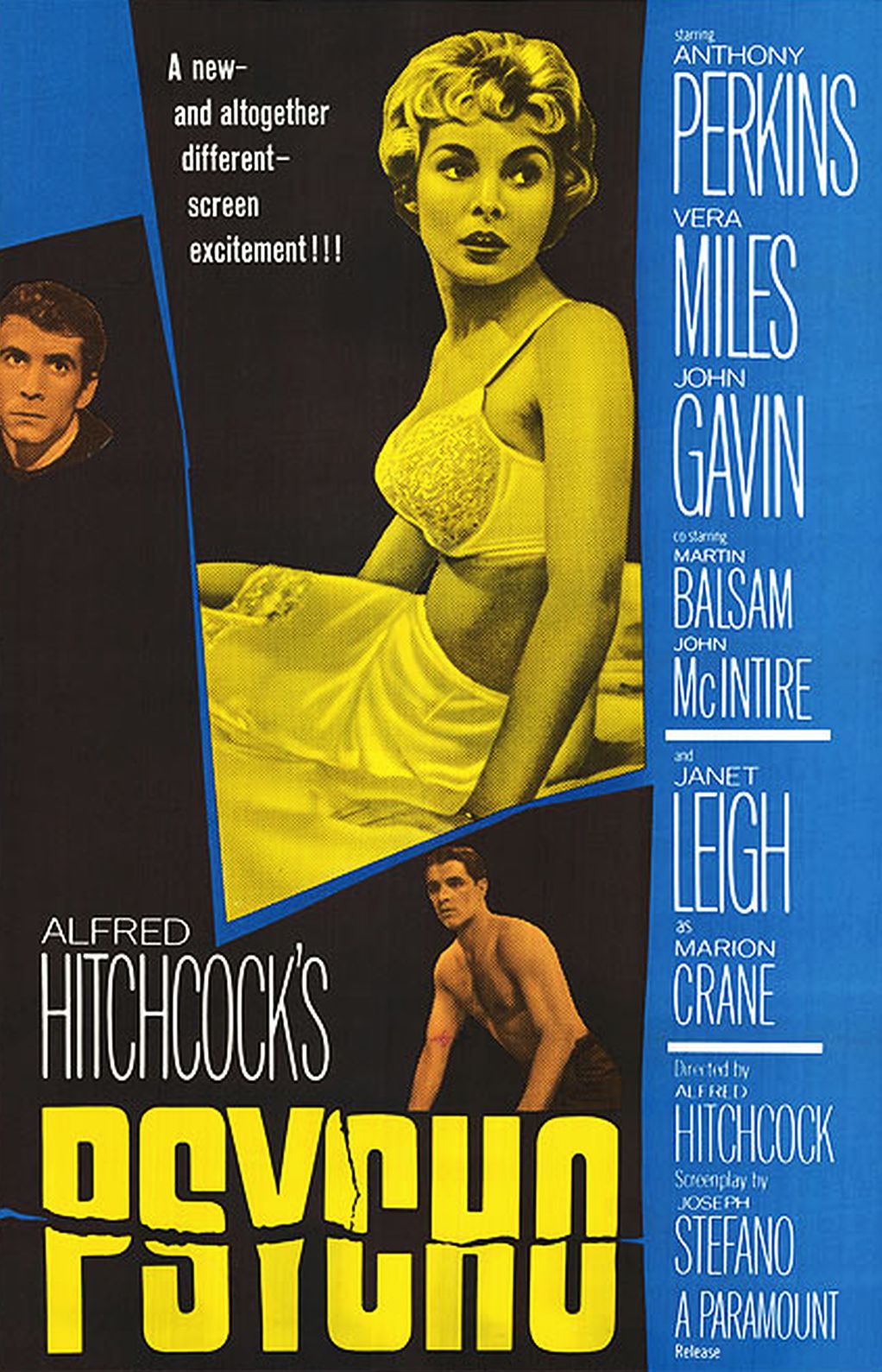
Psycho was an extremely popular American horror-thriller film, directed and produced by Wilfred Hitchcock and is still watched to the present day. It smashed the box office earning 60 million dollars with only a budget of $800,000. Psycho is entirely filmed in black and white, due to such a low budget, however, this didn't stop the amount of recognition it received. It managed to earn four Academy Award nominations, including Best Supporting Actress for Janet Leigh and Best Director for Hitchcock. It's also considered one of the best films of all time by critics across the industry. It's about a Phoenix secretary (Marion), who is fed up with having to sneak out for lunch breaks to meet her lover (Sam) who is unable to get married due to the majority of his money going to alimony. One working Friday, Marion's employer asks her to take $40,000 (in cash) 
to the bank for deposit. Marion sees the opportunity to take the money and does so, as well as leaving the area in hope to make a new life in California with lover, Sam. After spending a night in her car, she cannot manage to make the whole way so spends her second night at the Bates Motel. She meets the owner of the motel who is highly dominated by his mother and eventually decides to give back the money to her employer but still stay at the motel. A week later, Marion is found to be missing and so a private detective gets involved to try and find her when eventually they come across the Bates Motel, where all is revealed. There is a very famous scene in Psycho where Marion is getting murdered in the shower and this is a vital piece of the films success. Because this scene was directed so well in the fact that you couldn't see the murderer, the music complimented the tenseness of the scene and great suspicion was built up - this is partly what made it so popular. Audiences of this time clearly regarded it as a forerunner of things to come so it was different to most horror-thrillers seen before it.


1980's

Fatal Attraction (1987)
Fatal Attraction is an American psychological thriller directed by Adrian Lyne and was very popular making a staggering $320,145,693 at the box office. However, the budget for the film was 14 million dollars so was expected to have a high income return. The film became the second highest-grossing film of 1987 in the United States and also the highest-grossing film of the year worldwide and also received six Academy Award nominations. In a very vague summary, False Attraction is mainly about a married man (Dan) who has an affair with a one night stand (Alex). Unlucky for him, Alex doesn't want to accept that a 'one night stand' was all it was. This results in emotional blackmail, stalking and obsession over him and his family. Alex springs on many violent and obsessional scenes with a finale of her death right at the very end. The psychological theme is a trend that seems to show as popular within an audience. I believe this is because it allows the audience to explore the characters a lot more with their complex and maybe deluded ways of thinking portrayed clearly on screen. Again, this is a unique narrative, making it even more appealing to an audience. At this time in the 80's psychological thrillers were progressing to be more gripping and edgy, Fatal Attraction setting a high standard for the genre.

2000's - Present


The Call (2013)
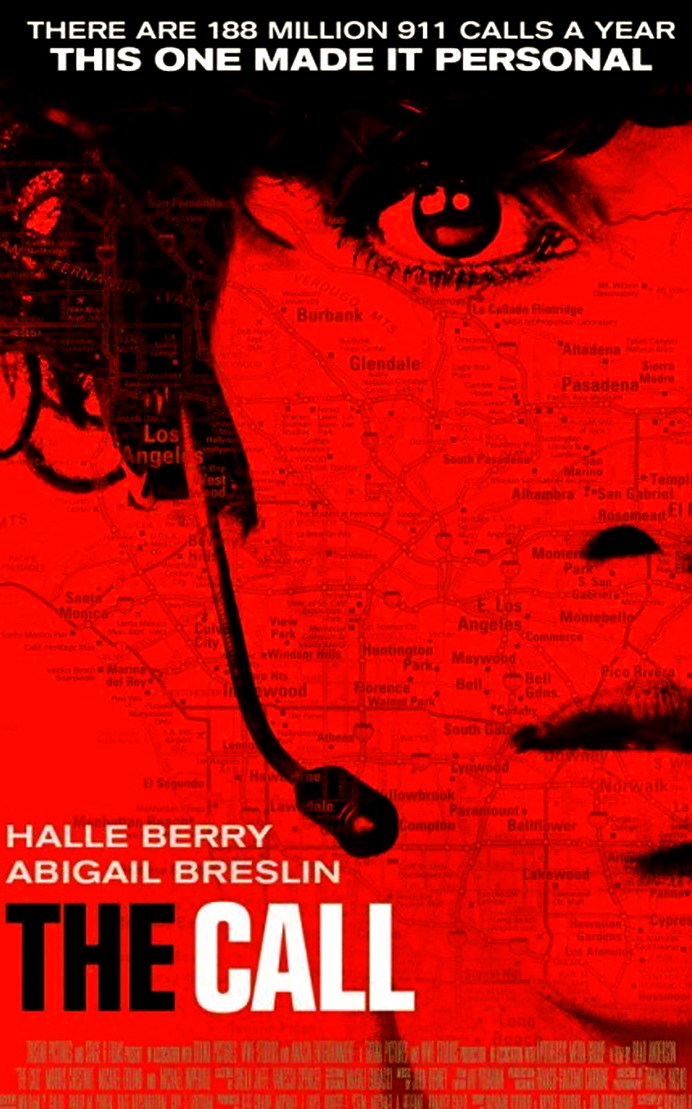
The Call is an American crime thriller that is about a 911 operator who takes a call from an abducted young girl who is at risk of tortured murder. To be vague, she realises that the best way to save her is try and find and confront the killer herself. When she does so, she finds the man to be a psycho, murdering girls for their hair, she just manages to escape her death. This film earned $68,572,378 at the box office and managed to get Halle Berry two award nominations. The fact that Halle Berry is a famous actress known for her realistic performances, could be part of the reason for this film's success. If the audience know an actor or actress in a film and know them for the good of their acting, this will make them want to go and see the film. There isn't many other films that I could find centered around an individual 911 operator, so the writer, Richard D'Ovidio, was clever in thinking up of such an original idea. The character of Turner (the 911 operator) is very emotionally sensitive, which audiences could relate to when feeling empathetic towards her in the situations she becomes to be in. When an audience is able to be empathetic towards a character it makes them feel more apart of the film and so they connect with the narrative especially, a lot more. Again, this psychological theme occurs in this film, clearly illustrating a trend right back from the 1940's to the present day that this type of thriller tends to be very popular.

All of these thrillers happen to be American, so this could demonstrate a strong audience liking to the style of American thrillers. Whether this be because of the larger budgets available as opposed to the British film industry or just the different elements that American thriller may include such as effects like CGI. 


Hannibal is the top grossing thriller film earning over 165 million dollars at the box office. Its narrative is very unique and is based on a mentally disturbing idea of murdering people and then digesting them. Furthermore, giving them to others to eat too. This twist of narrative is very different to most films of his kind. Therefore, this is shown to be extremely popular with audiences as this is number one in the chart . The weirdness and mental aspect of this kind of narrative obviously appeals to viewers and intrigues them as it is so unlike any realistic situation in everyday life. It may shock viewers in some scenes but that is what makes it so good - audiences feel to stop watching but also feel obliged to carry on. I feel that this is part of what makes it so popular - it's unfamiliarity to the thinking of a normal being and its power to make the audience want to watch more. 
The Cell is number ten in the chart shown and earned $61,334,059 and was released a year before Hannibal. It is based on a child psychologist (Catherine) who is an expert in an experimental treatment for coma patients, allowing her to be able to enter the minds of her patients. A serial killer (Carl) falls into a coma before the FBI can locate his final victim. This leaves Catherine the job of solving this mystery through the advantages that she has. Once again, this is another psychological thriller that proves to be supporting the favour in this type of thriller. However, Catherine is played by Jennifer Lopez, a famous actress and singer and so may attract more of a mass audience. 

Comfortably at number twenty in the chart is Taking Lives, still earning a successful value at the box office. It is another psychological thriller starring Angelina Jolie and Ethan Hawke - two famous actors. The narrative consists of a wanted serial killer who takes the identity of each new victim he has. The FBI profiler missioned to search for this man is made to travel across North America in seek of him. Though, she is forced to work with a new police force in a peculiar city of which she necessarily doesn't fit into. The way the audience are able to follow the profiler on her journey to discover this killer makes them feel empathetic towards the character. Angelina Jolie plays the role of the profiler and so makes the character more appealing to the audience for her known talent in acting. Therefore, audiences connect with her a lot more than say, an unknown actress as they may not be aware of her as much. This gains viewers for the film and makes it become more successful, so clearly the people who star in films can make an impact on the money the film makes.